ACM Extended
ACM EXTENDED / REFERENCE

IV access & infusions

Compare gauges, choose an access site, calculate a drip, and check why a bag is draining slowly or delivering less fluid than expected.

Open printable IV / IO chart

Choose and establish access

01

Choose IV or IO access

Critical casualty: make early IO part of the access plan. For most critical patients in ACM Extended, treat IO as a routine priority so urgent medication has a route while your best IV sites remain available for blood and fluids. Repeated IV attempts consume time and can leave holes that compromise later sites.

Plan one running bag or Y set per access site. The prepared set menu refuses another running line on an occupied IV or IO. A blood Y set includes its clamped saline reserve, but still occupies one access site. More independent infusions require more usable sites.

Does medication need to reach the patient urgently?

Yes: critical or rapidly deteriorating
Establish IO early

Use the available IO procedure to obtain a medication route. Keep the best peripheral IV sites for blood or another infusion that needs its own line.

Why: a difficult peripheral vein should not hold up the whole access plan. IO avoids the peripheral IV leakage model.

No: enough time to choose a vein
Choose a usable IV site deliberately

Match the site to the medication, required flow and vein you can actually palpate. Check previous attempts before inserting.

Why: a functioning smaller catheter is more useful than a larger catheter that misses or leaks.

Then assign a purpose to each access site.

Is the medication a vesicant or irritant?

Yes: site integrity matters especially
Favor a functioning IO for urgent pushes

In a critical patient, IO provides a medication path while preserving IV sites for fluids. If using an IV, choose intact anatomy and reassess that exact site for leakage, bruising and pain.

Why: leaked medication can cause local injury and reduce the dose reaching circulation. Moving to an upper IV or an EJ does not make it immune.

No: the catheter still has to work
Choose by flow demand and placement margin

Use a suitable IV for the planned fluid or medication. A lower risk medication can still be lost through a compromised site.

Why: absence of a vesicant label does not prove that the displayed syringe dose reached the patient.

For peripheral IV access, check the limb before choosing a gauge.

Has this limb already had a missed or removed IV?

Yes: there may be a downstream leak
Move above the damage, to another limb, or to IO

On a limb, placing below a missed or removed site can send fluid toward the old hole and cause leakage. An intact IV above every compromised site avoids that particular downstream hole rule.

Why: the game tracks the upper, middle and lower tiers and the actual height of the puncture within them. Choosing the same tier alone is not enough.

No: compare vein size and perfusion
Use the vein you can reliably locate

Low pressure narrows the peripheral placement target and weakens the palpation cue. Larger, shallower, less mobile veins are more forgiving.

Why: a larger catheter reduces the placement margin further. IO or EJ may be useful when the peripheral target is poor.

Confirm access, then treat. Remove the constricting band from an IV, select the correct site for the bag or syringe, and reassess actual delivery and patient response. IO does not remove systemic medication effects or every cause of stopped flow.

Choose the gauge for the job and the vein

Lower gauge numbers mean larger catheters. Flow is only one part of the choice: placement accuracy, vein caliber and an intact delivery path determine whether that capacity is useful.

14G
Highest IV capacity

Choose when: rapid fluid delivery needs the capacity and a large, usable vein supports it.

Tradeoff: tightest placement margin. An oversized attempt adds a further penalty; forearm placement is especially unforgiving.

375 mL/min base0.65× target

16G
High flow with a wider margin

Choose when: you need substantial fluid capacity and have a suitable peripheral target.

Tradeoff: still needs a vein large enough for the catheter. It is oversized for the modeled popliteal target.

250 mL/min base0.85× target

18G
More forgiving access

Choose when: the vein or placement conditions favor a smaller catheter and its available flow is sufficient.

Tradeoff: half the configured 16G flow. Improve the access plan if resuscitation needs more independent capacity.

125 mL/min base1.15× target

20G
Most forgiving IV margin

Choose when: a small or difficult target makes successful placement the priority.

Tradeoff: lowest IV capacity. Do not let repeated small IV attempts delay IO in a critical patient.

87.5 mL/min base1.35× target

Base flow is before the clamp, fluid and pressure modifiers. Target multipliers apply before vein anatomy and perfusion. These numbers describe the game configuration.

Which location helps your plan?

Access locationWhy consider it?What changes the decision?
Upper arm: Basilic
Largest modeled limb vein caliber, shallow and relatively stable; supports the normal 14G threshold.
Preserve it when you need fluid capacity. A proximal peripheral IV can still leak and develop vesicant injury. An occupied upper arm cuff or AED position can block insertion.
Middle arm: AC fossa
Moderately large, shallow target with a normal 16G threshold.
Less forgiving than the upper arm model. Check whether a missed or removed site lies above it.
Lower arm: Cephalic
An additional forearm option that preserves upper sites for later use.
Small caliber and high vein mobility make placement harder. A 14G must be extremely central; favor a more forgiving gauge if flow needs allow.
Upper leg: Great Saphenous
Large target once located; normal 16G threshold.
Greater modeled depth makes palpation harder. Limb pressure still changes the placement margin.
Middle leg: Popliteal
Another access option when other sites are occupied or damaged.
Smaller and deeper target with a normal 18G threshold. A larger catheter incurs an oversize penalty.
Lower leg: Dorsal Arch
Relatively generous, stable target in this game's catalog; normal 16G threshold.
Check every compromised site above it. The name alone does not imply a tiny target in this implementation.
External jugular: EJ
Its minigame does not use the peripheral systolic pressure penalty; gauge still changes accuracy.
It remains peripheral for vesicant injury. The downstream hole direction reverses: a neck puncture toward the clavicle can compromise a new stick above it on the same side.
IO: FAST1 or EZ IO
Early medication access for critical casualties; independent of a damaged peripheral IV's leakage state.
Use the supported IO site and procedure. Base capacities are about 162.5 and 137.5 mL/min respectively, so IO is not automatically the fastest fluid route.
What the game models for this access plan

The early IO recommendation is a gameplay priority for critical casualties. The game does not require every critical patient to receive one before other treatment.

The current delivery path applies vesicant injury to medication that actually leaks at the selected peripheral IV, including upper sites and EJ. IO leakage is not modeled by that path. This does not make IO immune to medication overdose, systemic adverse effects or other access problems.

Calcium chloride, epinephrine, norepinephrine, HTS and mannitol are examples in the vesicant table. Amiodarone, magnesium and esmolol use irritant entries. Calcium gluconate also has a higher threshold entry. Check each medication card and the access site instead of assuming that a medication or proximal site is harmless.

Verified against ACM Extended revision 21f8694:

Configured access capacity before fluid modifiers14G 375, 16G 250, 18G 125, 20G 87.5, FAST1 IO 162.5 and EZ IO 137.5 milliliters per minute, rounded from the configured base.AccessBase capacity, mL/min14G37516G25018G12520G87.5FAST1 IO162.5EZ IO137.5
Configured access capacity. Actual bag drainage also depends on the delivery path and fluid modifiers.
AccessFlow factorPeripheral target multiplier
14G
1.50
0.65
16G
1.00
0.85
18G
0.50
1.15
20G
0.35
1.35
FAST1 IO
0.65
Separate IO procedure
EZ IO
0.55
Separate IO procedure

What makes placement easier

A larger target multiplier makes the peripheral IV minigame more forgiving. A lower gauge number means a larger bore. Vein caliber, depth, movement and gauge suitability modify the target further. A catheter larger than the vein’s configured limit adds a placement penalty.

In gameGame default: 18G flow

18G uses the initialized 0.50 flow factor. The flow function contains a 0.55 fallback for an absent setting; that fallback is not the normal initialized value.

IV catheter placement

Establish a peripheral IV

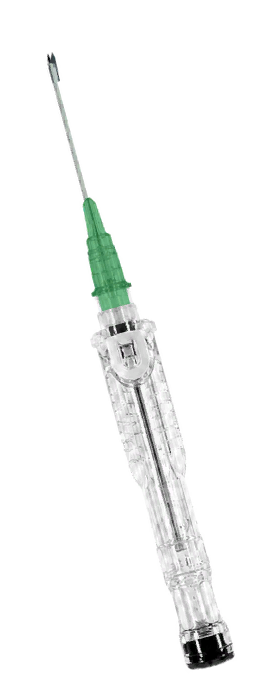
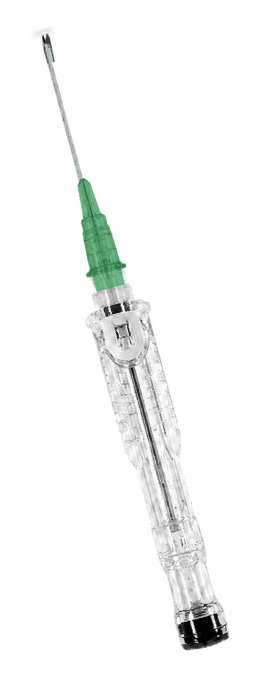
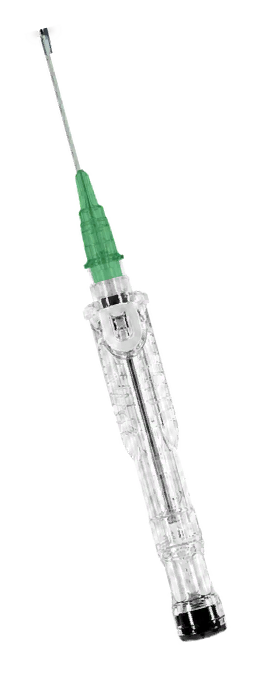
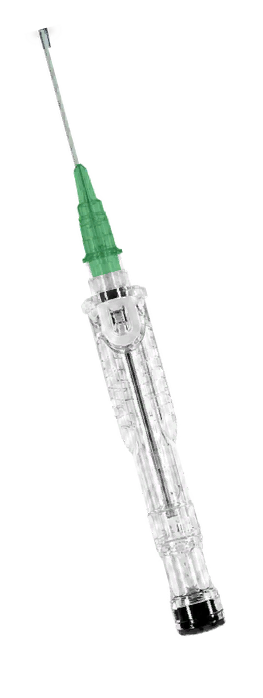
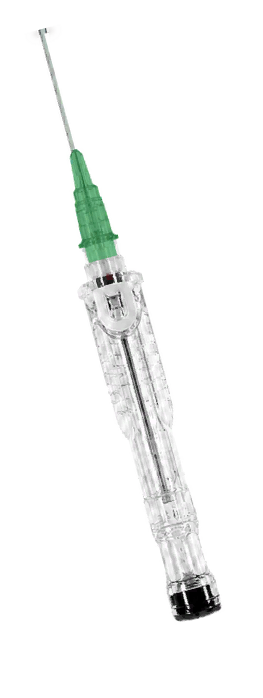
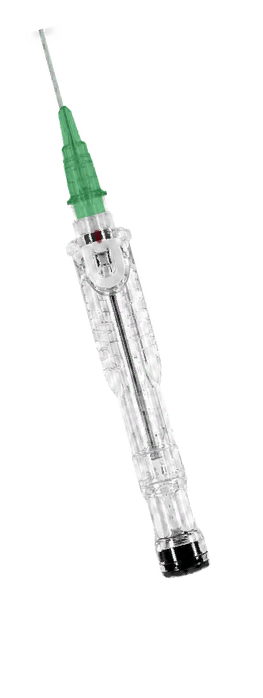
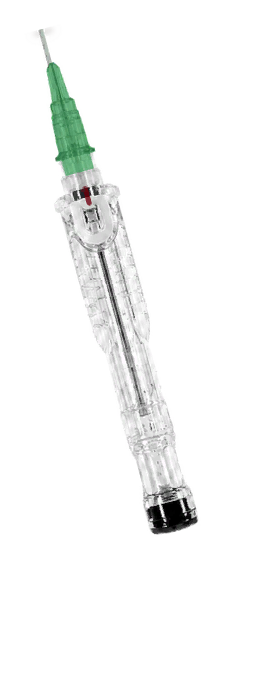
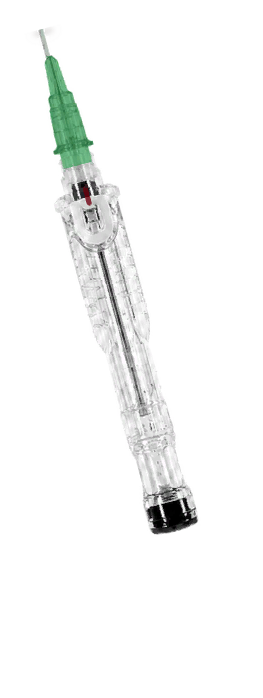
Open the medical menu, select an arm or leg, then choose Establish IV. Apply the band, palpate the target with an empty hand, scrub the site, and select a catheter gauge from the tray. The images below are the mod’s actual 18G catheter frames. Other gauges use the same advance, thread and retract sequence.

Default mouse controls: LMB = left mouse button; MMB = middle mouse button (press the wheel); RMB = right mouse button. SCROLL UP / SCROLL DOWN mean rotate the wheel.

18G catheter: Ready to insert

FRAME 00 / 14

Ready to insert

LMB Select the catheter

Press LMB on the 18G tray slot to pick it up. Move the mouse to position the needle tip over the vein you palpated.

Aim using the visible tip. The tip can lag behind the cursor; arm position also changes the approach angle.

CONTINUOUS INSERTION · FRAMES 01–06

Advance the catheter

Hold LMB + move the mouse toward the needle tip

Press and hold LMB at the puncture point. Keep holding it while moving the mouse forward along the catheter’s axis. Release LMB to pause; hold it again to continue. Once fully inserted, use SCROLL UP to thread.

These six frames play as one continuous motion. The flashback artwork can also appear on a missed puncture; assess the finished access rather than relying on the artwork alone.

CONTINUOUS THREADING · FRAMES 07–11

Thread the catheter

SCROLL UP Thread · SCROLL DOWN Reverse

After full insertion, use SCROLL UP to advance the catheter off the seated needle in 20% steps. Reach 100% threading before retracting the needle. SCROLL DOWN reverses one step.

At 100%, press MMB or SPACE to retract the needle. RMB away from the band also works. RMB on the band removes the band instead. SPACE is the default withdrawal key and can be changed by mission configuration.

18G catheter: Safety button pressed

FRAME 12 / 14

Safety button pressed

MMB or SPACE Start needle retraction

Once the catheter is fully threaded, press MMB or SPACE once. RMB away from the band is another option. This starts the automatic safety sequence.

After that press, the game advances the safety frames automatically. No additional drag or scrolling is needed.

18G catheter: Needle captured and withdrawn

FRAME 13 / 14

Needle captured and withdrawn

Automatic after MMB, SPACE or RMB

No further input is needed. Let the needle capture and withdrawal finish.

The procedure commits the catheter outcome after needle withdrawal. A missed puncture can leave a compromised site.

18G catheter: Catheter hub remains

FRAME 14 / 14

Catheter hub remains

RMB Remove band · LMB Done

Press RMB on the applied band to remove it. Press LMB on Done to return to the medical menu, then select the intended access for fluid or medication delivery.

Reassess the site for swelling, confirm actual bag drainage and check the patient’s response. A seated hub alone does not prove successful delivery.

Confirm the site after placement

The artwork alone does not establish a successful IV. A missed puncture can still reach the hubbed frame and leave a compromised site. Remove the band and reassess for swelling or poor delivery. Compare actual fluid delivery with the site rules below.

Controls at a glance

ActionKey or mouse inputWhat to check
Open the procedure
Medical menu > select an arm or leg > Establish IV
The action opens the placement screen. Picking up a catheter requires that gauge in your inventory.
Apply a constricting band
LMB on BAND, move it to the limb, then LMB at the snapped position
Requires a NAR BOA constricting band in your kit. This is separate from catheter placement.
Palpate
Hold LMB and move the mouse over the limb with no tool held
With the band applied, the fingertip indicator changes as you approach the vein. Position and perfusion affect the feedback.
Scrub
LMB on the alcohol pad slot; hold LMB and move the mouse across the site
Actual coverage performs the scrub. Press LMB on the pad slot again to put it down.
Pick up or put down a catheter
LMB on a gauge slot
The available gauges are 14G, 16G, 18G and 20G. Put a held catheter down before choosing another gauge.
Insert and advance
Hold LMB at the entry point and move the mouse toward the tip along the needle axis
Release LMB to pause. Hold LMB again to continue. Sideways mouse movement does not advance it.
Thread
SCROLL UP to thread; SCROLL DOWN to reverse
Available after full insertion. Each wheel step changes threading by 20%. Reach 100% before withdrawal.
Needle safety and withdrawal
MMB or SPACE; alternatively RMB away from the band
Available only after full threading. SPACE is the default mission configurable withdrawal key.
Remove band
RMB on the applied band
A constricting band on the IV limb blocks IV flow until removed.
Change limb view
LMB on Flip (Front/Back)
Use the other face to reach the corresponding veins.
Pan the view
UP ARROW / DOWN ARROW
Moves the view without using the wheel needed for threading.
Remove a placed catheter
Put tools down; hold LMB on the hub and move the mouse backward along its axis
This removes the catheter. It is different from retracting the insertion needle.
Leave the screen
LMB on Done or ESC
Returns to the medical menu. Closing the screen does not establish an unfinished catheter.

External jugular access

Select the head and choose Establish EJ IV. The action is available when the patient is unconscious, prone or dead. EJ placement uses the neck view and does not require a constricting band. Use the same insertion, threading and safety controls. The image sequence above illustrates the catheter; the neck has its own orientation and target geometry.

Sources and revision

Controls and artwork checked at revision abf6253. See insertion and flash artwork behavior, mouse controls and keyboard controls.

02

Pressure and site difficulty

SiteLow end of peripheral patencyFull patency
Arm
Systolic pressure 70 or below
Systolic pressure 90 or above
Leg
Systolic pressure 60 or below
Systolic pressure 80 or above
External jugular
Does not use the peripheral pressure window
Patency is set to 1; gauge still changes target size

Peripheral IV patency

Between the endpoints, patency increases linearly. Low patency reduces the feel radius, hit radius and maximum palpation indicator intensity. It does not reduce the minigame hit radius to zero. The vein’s own geometry still matters at full patency.

External jugular target size

At the default EJ settings, target radius grows from 0.0045 at 14G to 0.0075 at 20G, expressed as a fraction of the body image width. These are minigame geometry values.

Flow and site function

03

Drip calculator

The roller clamp maps position to drops per minute. The drop set converts drops into milliliters. Results below show the requested flow before catheter limits, pressure cuffs, complications and fluid specific rules.

Requested drip30 gtt/minVolume rate1.5 mL/minHourly volume90 mL/hMedication rate0 mg/minTime remaining166.67 min
CalculationFormula
Clamp to drip rate
5 × round(maximum drops × (position / 100)curve / 5). Positions at or below 1% return zero.
Volume rate
mL/min = gtt/min ÷ gtt/mL
Medication rate
mg/min = concentration in mg/mL × mL/min
Bag duration
Minutes = remaining mL ÷ mL/min; a closed clamp has no completion time

In gameDefault clamp and drop set

Default maximum: 120 gtt/min. Default exponent: 2. Default drop set: 20 gtt/mL. The supported sets are 10, 15, 20 and 60 gtt/mL.

Drip rate10 gtt/mL15 gtt/mL20 gtt/mL60 gtt/mL
20 gtt/min
2 mL/min
1.33 mL/min
1 mL/min
0.33 mL/min
60 gtt/min
6 mL/min
4 mL/min
3 mL/min
1 mL/min
120 gtt/min
12 mL/min
8 mL/min
6 mL/min
2 mL/min
04

What changes actual flow

FactorGame behavior
No access or an invalid site
No flow
Constricting band on the IV body part
Blocks IV flow until removed; this check does not block IO
AAJT occlusion
Blocks affected access
Tracked medication bag
Uses that bag’s requested clamp rate, capped by access capacity before the cuff multiplier
Untracked fluid bag
Also uses the ACE flow setting, native IV/IO multipliers and fluid type multiplier
Bag held up
Raises access capacity; a requested rate already below that capacity stays the same
Pressure infuser cuff
Multiplies delivered flow after the clamp/capacity comparison. Default full boost is 2.5×, decaying with a 150-second half-life until the remaining pressure falls below 0.08
Blood warmer path
Uses the configured warmed blood rate, default 100 mL/min
Cold blood
Default initial flow factor 0.65, easing toward 1 as the unit warms
Native IV complication stages
Drainage factors are 1.00, 0.90 and 0.85 for stages 0, 1 and 2
Several native bag types at one site
Native sharing rules can divide the available flow; a Y line saline reserve is excluded from blood’s sharing divisor

Confirm actual delivery

Track the bag’s actual remaining volume and the patient’s response. The clamp display alone cannot include every modifier in the final fluid calculation.

05

Fluid loss at a compromised site

Site conditionFraction of drained fluid admitted to circulation
Intact site
100%
Native stage-2 infiltration
80%
Compromised catheter flag
20%
Stage-2 infiltration and compromised flag together
16%
IO
This IV leakage calculation returns 100%

In gameWhat reaches circulation

Fractions multiply. A bag can lose 100 mL while only 16 mL reaches circulation in the combined case. Infused medication uses the same split: the systemic dose follows admitted volume, and the remainder is recorded as local leakage. See fluid compartments and conversion for what happens after fluid enters circulation.

Concentration, rate and delivery

CalculationFormula
Final volume for a fresh prepared bag
Carrier volume + every injected solution volume
Bag concentration
Medication amount remaining ÷ total solution volume remaining
Delivered dose per minute
Bag concentration × mL/min actually admitted to circulation
Dose per hour
Bag concentration × mL/h actually admitted
Drops per minute
mL/min × set factor in gtt/mL
Worked infusion example

50 mg ketamine added to 100 mL saline, delivered at 60 mL/h. This is a game arithmetic example.

  1. Draw the medication50 mg ÷ 50 mg/mL = 1 mL
  2. Include the injection volume100 + 1 = 101 mL
  3. Find the final concentration50 mg ÷ 101 mL ≈ 0.495 mg/mL
  4. Calculate delivered medication0.495 × 60 ≈ 29.7 mg/hAbout 0.495 mg/min, before leakage or stopped flow.

Check the delivered rate

Use the drip calculator with the final bag concentration, then confirm actual drainage and clinical effect. With a 20 gtt/mL set, 60 mL/h requires 20 gtt/min before flow limits and complications. An intact bag draining at that rate takes 101 minutes to empty in the example.

CautionClamp increments and shared bags

The default clamp changes in 5 gtt/min increments. A requested dose rate may therefore fall between available settings. Site leakage also reduces the systemic dose. When multiple medications share a bag, one clamp changes every component’s rate together; it cannot independently titrate each medication. Do not assume that menu acceptance establishes chemical compatibility.

CautionReassess during delivery

Pressors, sedatives and opioids still have adverse effects and interactions when infused. Delivery stopping does not instantly remove drug already received. Keep a working airway plan, reassess sedation and ventilation, and check the infusion site during PFC and transport.

Prepare and deliver medication

06

Preparing and flushing medication

Supported bags

Prepared medication bags accept the listed injectable medications in normal saline. Premixed bags have their own route and dose records.

Preparation ruleCurrent value
Allowed medication additions
Amiodarone, epinephrine, norepinephrine, lidocaine, ketamine, TXA, fentanyl, morphine, midazolam, ondansetron, calcium chloride, calcium gluconate, ceftriaxone and propofol
Allowed bag type for adding medication
Saline
Carrier matching
Saline and PlasmaLyte identities are recognized by the carrier matching logic; this does not widen the medication addition allowlist
Flush required IV/IO pushes, when enabled
Adenosine, amiodarone, calcium gluconate, calcium chloride and epinephrine
Flush required effect
The pushed dose waits in the line until Flush IV Line (Saline) delivers it
Y line flush cadence
After 2 units or 1,000 mL of blood; uses 50 mL saline over 5 seconds
Small vial remnant
Residual volume at or below 0.0105 mL can be discarded

CautionCheck the administration route

Prepared syringe route handling differs from native medication actions. Review the route notes on the medication cards before assuming that a legacy class or a drawable vial has a native action for every route.

Slow and incremental medication pushes

With [HARDCORE] Medications enabled, IV and IO pushes deliver continuously. Choose a duration, watch the remaining volume and use Stop Push when you want administration to stop.

Check the amount as well as the time. The default times below are game presets, not guaranteed safe limits. A larger or more concentrated syringe delivers more medication per second at the same selected duration. Most drugs benefit from avoiding an abrupt peak; adenosine is the deliberate rapid-push exception.

Hardcore on

IV / IO medication enters in measured portions. Push becomes a red Stop Push button. Closing or reopening either medical menu keeps the same push running at its original rate.

Drug-specific defaults and rapid manual-push consequences apply. IM uses its original administration path.

Hardcore off

The normal administration path commits the medication at completion. Closing the dialog before completion cancels that uncommitted administration. The optional IV / IO duration field remains, normally blank with a 3-second default.

Normal dose effects, interactions, overdose and actual infusion-rate hazards remain active.

Set the time for the actual contents

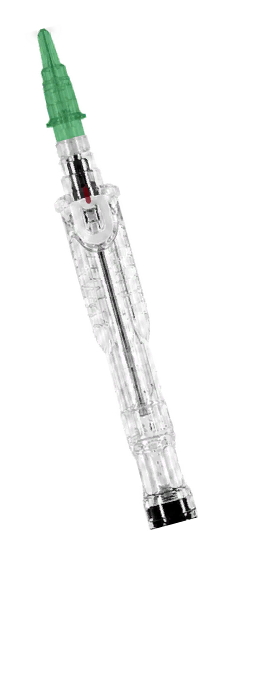
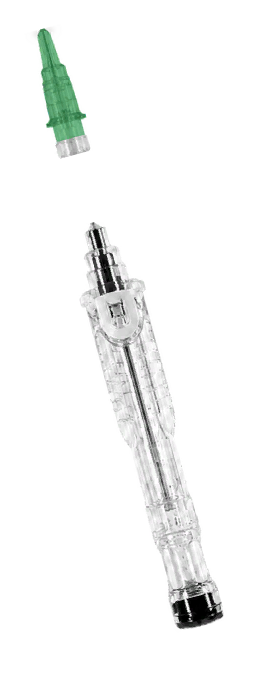
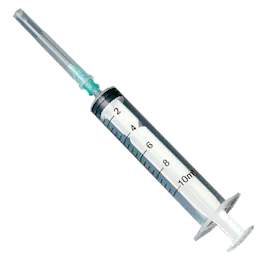
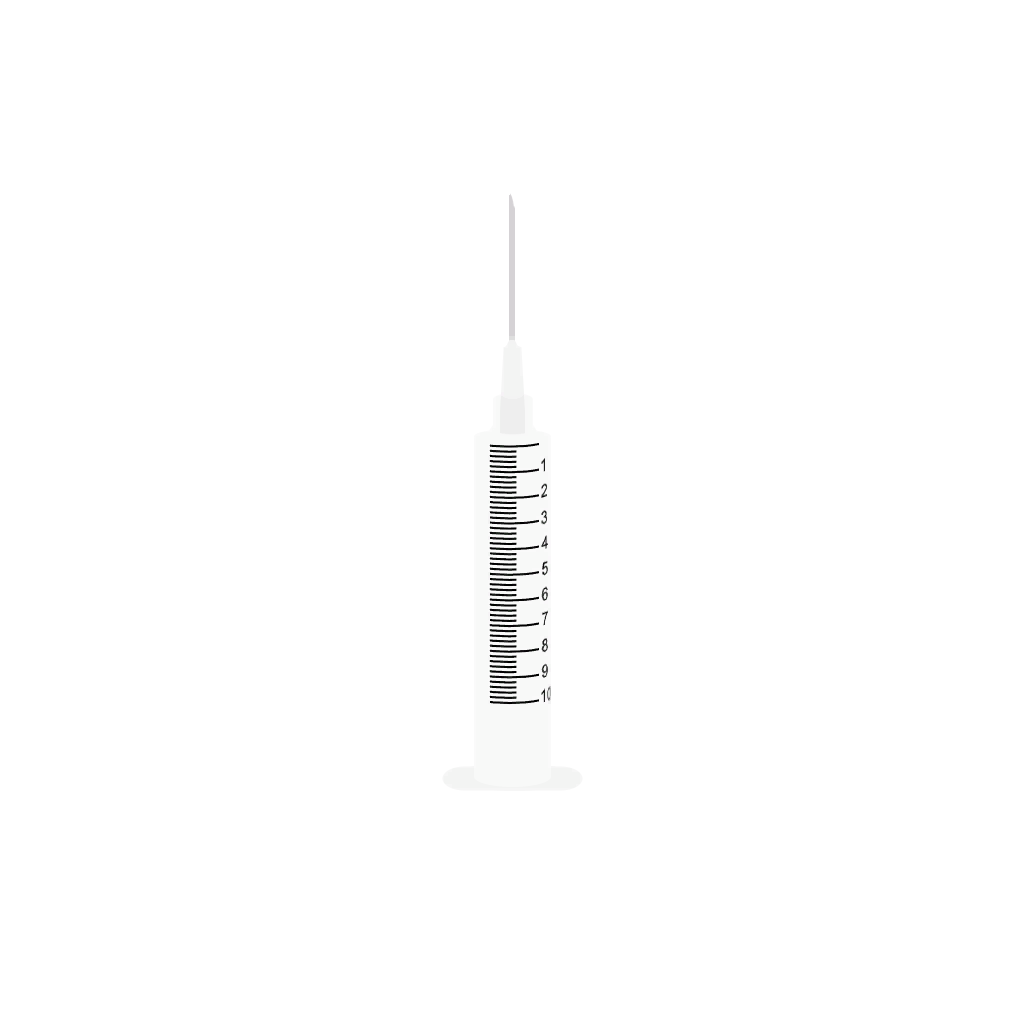
Original 10 mL syringe inventory artwork
Read the remaining mL and medication contents before starting.
  1. Select the patient, the intended IV / IO site and the prepared syringe.
  2. Set Seconds to Push over: to 1–300 seconds. With Hardcore on, a blank field uses the medication's suggested time.
  3. The timer covers the current target volume, ordinarily all remaining drug and saline in the syringe. Prepared measured epinephrine uses its selected 1 mL, 2 mL or remaining-volume choice.
  4. Press Push. The selected syringe, duration and site are locked while it runs. Follow the actual remaining volume and patient response.
Example: 5.00 mL over 30 seconds
Selected volume5.00 mLSelected time30 sSolution rate0.167 mL/s

After 15 seconds of uninterrupted delivery, about 2.50 mL has been pushed and 2.50 mL remains. Drug mass per second also depends on concentration. This volume example does not select a medication dose.

Hardcore default push times

Compounded syringes use the longest component default. Ketofol uses 30 seconds because both ketamine and propofol default to 30 seconds. Other unlisted drugs use the 3-second fallback. The preset does not replace checking the syringe's total medication content.

MedicationDefault timeWhy duration matters
3 s
Keep this one rapid. Slow delivery weakens its brief SVT conversion effect.
With Hardcore off

The manual bolus speed penalty is absent with Hardcore off. Adenosine infusion still has a weak conversion multiplier.

30 s
Rapid IV / IO delivery can add a temporary loss of respiratory drive on top of the dose effect.
With Hardcore off

The added rapid-ketamine load is absent with Hardcore off; dose, sedation and combination effects remain.

300 s (5 min)
Check elemental calcium delivery rate and accumulated excess. Excessive delivery can cause severe cardiovascular toxicity.
With Hardcore off

Normal mode spreads manual toxicity input over a reference window. Calcium replacement and excessive accumulated calcium still matter.

120 s (2 min)
At the full 3 g replacement reference, 120 seconds delivers 139.5 mg/min elemental calcium, above the 100 mg/min fast-rate onset. A 300-second delivery gives 55.8 mg/min; earlier doses still matter.
With Hardcore off

Normal mode spreads manual toxicity input over a reference window. This salt remains distinct from calcium chloride.

300 s (5 min)
Fast delivery can lower vascular resistance and pressure. Follow rhythm, pressure and cumulative dose.
With Hardcore off

Normal mode spreads the custom bolus drive over at least 600 seconds. This is an internal physiology window, not the visible push timer.

60 s (1 min)
The actual push rate feeds existing pressor support. Follow pressure, perfusion and rhythm; no separate rapid-norepinephrine syndrome is added.
With Hardcore off

Normal mode spreads the custom bolus drive over at least 60 seconds. Infusions continue to use actual delivered flow.

60 s (1 min)
Delivery builds the concentration that controls heavy blockade, bradycardia and hypotension.
With Hardcore off

Normal mode spreads custom bolus input over at least 60 seconds. Concentration-dependent toxicity remains active.

60 s (1 min)
Follow accumulated concentration as well as push speed. Seizures and cardiac toxicity remain possible as exposure rises.
With Hardcore off

Normal mode spreads custom bolus input over at least 120 seconds. Existing concentration toxicity and clearance modifiers remain.

300 s (5 min)
Fast delivery can cause bradycardia and hypotension. Check the delivered mass per minute.
With Hardcore off

Normal mode spreads custom bolus input over at least 300 seconds. Actual infusion-rate hazards remain active.

30 s
Rapid delivery can add a sharper temporary fall in respiratory drive, vascular resistance and pressure.
With Hardcore off

The added rapid-propofol load is absent with Hardcore off. Normal hypnosis, pressure effects and interactions remain.

60 s (1 min)
Rapid delivery can add temporary respiratory and hemodynamic depression, especially with other sedatives.
With Hardcore off

The added rapid-midazolam load is absent with Hardcore off. Normal sedation and combination effects remain.

30 s
Rapid delivery can add temporary opioid respiratory and cardiovascular depression. Include other sedatives in the assessment.
With Hardcore off

The added rapid-opioid load is absent with Hardcore off. Opioid effects, overdose and interactions remain.

60 s (1 min)
Rapid delivery can add temporary opioid respiratory and cardiovascular depression. Allow for effects already on board.
With Hardcore off

The added rapid-opioid load is absent with Hardcore off. Opioid effects, overdose and interactions remain.

30 s
Rapid delivery can modestly accelerate establishment of blockade. Dose remains dominant; paralysis supplies no sedation.
With Hardcore off

The rapid-delivery multiplier is absent with Hardcore off. Native dose-dependent paralysis remains.

Why a default time can still produce a fast medication rate

150 mg amiodarone over 300 seconds = 30 mg/min. That is above the model's 25 mg/min onset for its fast-rate pressure penalty. The 300-second preset does not bypass that threshold. Total dose, elapsed time and response must be considered together.

Adding saline while keeping the same medication mass and total push time does not reduce the average medication mass per minute. Stopping early reduces the total amount delivered, but does not change the rate that was running before the stop.

Adenosine uses a different rule: with Hardcore on, the speed multiplier is strongest through 5 seconds per 6 mg equivalent and weakens as delivery slows. The default is 3 seconds. See its card for supported rhythms and flushing.

The card effect curves describe native timing after a reference dose reaches the patient. An incremental push spreads that dose across time; do not read the curve's peak as a countdown from pressing Push.

Stop, close menus and resume

Close either menu

The running push continues. When the Narc Box is closed, the syringe appears in the lower right corner with its actual artwork, moving plunger, remaining mL and mL/s.

Click the corner syringe

Return to the same patient, Body Map, IV / IO site and syringe. The red Stop Push button is available. Opening the menu preserves the current timer and rate.

Press Stop Push

The remaining contents return to the same carousel syringe, tracked to 0.01 mL. Medication already admitted stays delivered. Drug and saline components are removed in their mixture proportions.

Restart the partial syringe

Select the remaining syringe and check the duration again. A new run divides its remaining target volume by that duration. It can therefore have a different mL/s from the previous run.

Stay in range and confirm delivery

AED distance limit

Stay within the configured AED distance limit. Both people must be outside vehicles or in the same vehicle. The fallback distance is 5 m; use your mission's actual setting.

Leaving that range or vehicle context stops administration. The push also stops if the selected vascular access is removed or replaced, or the provider becomes incapable of continuing.

Flush-required medication

With Require saline flush after push enabled, applicable doses still wait for the required flush. A long incremental push is kept as one logical load per medication, catheter and uninterrupted push session, retaining accumulated dose and elapsed push time.

Flushing therefore does not turn its many delivery portions into separate simultaneous rapid pushes. Prepared measured epinephrine follows its dedicated delivery path.

A stopped push can briefly show Stopping... while network acknowledgements settle. Rejected portions are restored to the same syringe; delayed requests are retried. Closing a menu is not a stop command while the Hardcore push is active.

For infusion concentrations and risk ranges, use the infusion reference. For preparation, see Ketofol and pressor mixtures. For every Hardcore switch, use the Hardcore settings comparison.

Sources and revision

Push behavior reviewed against ACM Extended dev bc90fc7: Suggested times · Normal and incremental administration · Push start and target volume · Continuous flow and leash · Stop and remaining contents · Corner syringe · Reopen the same treatment · Rapid medication effects · Manual and infusion rate handling · Flush consolidation.

Medication mixtures and preparation

Choose a recipe to walk through the in-game controls and watch the syringe fill. The examples use the mod's stock concentrations and preparation rules. Each component keeps its own dose and effects after it reaches the patient.

With Hardcore Medications on, compound syringes use the longest component push time. Ketofol defaults to 30 seconds for the current target volume. Read how to set the push rate, stop a partial syringe and continue with menus closed.

Ketofol

10 mL compound syringe · ketamine + propofol

The named game recipe combines equal liquid volumes of two different stock concentrations. Its mass ratio is 5:1 ketamine to propofol.

  • Ketamine5 mL at 50 mg/mL250 mg
  • Propofol5 mL at 10 mg/mL50 mg
Original game syringe10 mL capacityThe tint illustrates volume. Preparation steps show the measured draw.
  1. 01 Choose a 10 mL syringe

    Open the syringe draw view in the Narc Box and select a 10 mL empty syringe. Compounding is already the default; there is no separate Mix mode.

  2. 02 Draw 5 mL ketamine

    Select ketamine 50 mg/mL, pull the plunger to 5 mL, then press Draw. This locks in 250 mg and leaves room for the second component.

  3. 03 Add 5 mL propofol

    Select propofol 10 mg/mL. Pull from the existing 5 mL level to 10 mL total, then press Draw again. The added 5 mL supplies 50 mg propofol.

  4. 04 Check the label and Save

    Use Select Syringe Tag to record both concentrations, then press Save. The recognized label reads Ketamine 250 mg + propofol 50 mg (10 mL; 5:1 mg ratio). Confirm the selected syringe before administering a measured volume.

Finished contents

10 mL contains 250 mg ketamine + 50 mg propofol. Each 1 mL contains 25 mg + 5 mg.

Example syringe tag
KET 25 mg/mLPROP 5 mg/mL10 mL total
Preview a measured volume

Each 1 mL contains 25 mg ketamine + 5 mg propofol.

The preview shows the contents of the selected volume. It does not predict serum concentration or the patient's response.

Keep in view: This describes the full prepared container. It does not make 10 mL a single dose. Ketamine and propofol both contribute to the active hypnotic load; titrate to the game patient's response, ventilation and perfusion.

Push-dose epinephrine

10 mL dilution · cardiac-strength source

The recognized dilution uses the 0.1 mg/mL cardiac vial and a prefilled saline flush. The finished syringe contains 10 mcg/mL.

  • Saline flush10 mL initially; waste 1 mL9 mL retained
  • Epinephrine cardiac vial1 mL at 0.1 mg/mL100 mcg
Original game syringe10 mL capacityThe tint illustrates volume. Preparation steps show the measured draw.
  1. 01 Choose the 10 mL saline flush

    Select the prefilled 10 mL saline flush in the syringe draw view. The flush supplies its own syringe.

  2. 02 Waste 1 mL

    Use the flush waste workflow to reduce the saline to 9 mL. This creates exactly 1 mL of room for the cardiac-strength source.

  3. 03 Draw 1 mL from the cardiac vial

    Choose epinephrine 0.1 mg/mL and draw 1 mL into the retained saline. Complete the flush preparation. The exact recipe is 9 mL saline + 1 mL cardiac-strength epinephrine.

  4. 04 Read concentration before selecting a push

    Check the prepared syringe label 10 mcg/mL. Its stored administration options include 1 mL, 2 mL and the full remaining volume. Keep the container total distinct from the selected push volume.

Finished contents

10 mL contains 100 mcg. Each 1 mL contains 10 mcg; 2 mL contains 20 mcg.

Example syringe tag
EPI 10 mcg/mL1 mL = 10 mcg10 mL = 100 mcg
Preview a measured volume

Each 1 mL contains 10 mcg epinephrine.

The preview shows the contents of the selected volume. It does not predict serum concentration or the patient's response.

Keep in view: The 1 mg/mL epinephrine stock is ten times stronger and is not the source for this named dilution. A full 10 mL syringe contains 100 mcg; it is not one 10 mcg push.

Norepinephrine bag

4 mg added to 250 mL normal saline

A simple game preparation example for tracking one pressor at a time. Injected medication solution adds to the carrier volume.

  • Normal saline250 mL carrier250 mL
  • Norepinephrine4 mL at 1 mg/mL4 mg
Original game syringe10 mL capacityThe tint illustrates volume. Preparation steps show the measured draw.
  1. 01 Select the saline set

    Choose the prepared/spiked 250 mL normal saline set, then select Prep Infusion. This opens the draw view in bag preparation mode.

  2. 02 Draw 4 mL norepinephrine

    Choose norepinephrine 1 mg/mL and measure 4 mL. The syringe contains 4 mg before transfer.

  3. 03 Inject Into Bag

    Press Inject Into Bag. The selected set now contains 4 mg in 254 mL. Use the bag's generated label to verify the medication total and final volume.

  4. 04 Set flow and reassess

    Attach through a functioning access site, set the roller clamp and confirm actual drainage. Check pressure, perfusion, rhythm and the site. The flow preview below calculates solution content per minute.

Finished contents

250 mL saline + 4 mL medication = 254 mL. Concentration: 4,000 mcg ÷ 254 mL ≈ 15.748 mcg/mL.

Bag label check
NOREPI 4 mgFINAL 254 mL15.748 mcg/mL
Preview component rates

At 60 mL/h: Norepinephrine ≈ 15.748 mcg/min.

Arithmetic assumes this much solution reaches the circulation. A closed clamp, blocked site or leakage changes actual delivery. The two-pressor example shares one flow setting.

Keep in view: The bag total is a preparation example, not a target dose or serum level. Poor volume, acidosis, cold and low calcium can reduce pressor benefit. Check the vesicant guidance when selecting and monitoring the site.

Epinephrine bag

1 mg added to 100 mL normal saline

This bag example uses the 1 mg/mL epinephrine stock. Its source and final concentration differ from the cardiac-vial flush recipe above.

  • Normal saline100 mL carrier100 mL
  • Epinephrine1 mL at 1 mg/mL1 mg
Original game syringe10 mL capacityThe tint illustrates volume. Preparation steps show the measured draw.
  1. 01 Select the saline set

    Choose the prepared/spiked 100 mL normal saline set, then select Prep Infusion.

  2. 02 Draw 1 mL epinephrine

    Choose the 1 mg/mL stock and draw 1 mL. If using the 0.1 mg/mL cardiac vial instead, the same 1 mg requires 10 mL and creates a different final concentration.

  3. 03 Inject Into Bag

    Press Inject Into Bag. This stock creates 1 mg in 101 mL. Recheck the prepared set's label before attaching it.

  4. 04 Set flow and reassess

    Open the clamp to the intended setting and confirm actual drainage. Track rate, rhythm and perfusion along with pressure; follow the access site for leakage or irritation.

Finished contents

100 mL saline + 1 mL medication = 101 mL. Concentration: 1,000 mcg ÷ 101 mL ≈ 9.901 mcg/mL.

Bag label check
EPI 1 mgFINAL 101 mL9.901 mcg/mL
Preview component rates

At 60 mL/h: Epinephrine ≈ 9.901 mcg/min.

Arithmetic assumes this much solution reaches the circulation. A closed clamp, blocked site or leakage changes actual delivery. The two-pressor example shares one flow setting.

Keep in view: Epinephrine has its own cardiac drive and rhythm risks. Neither a target MAP nor a healthy-looking serum display alone establishes that escalation is beneficial.

Two pressors in one bag

Norepinephrine + epinephrine · shared flow demonstration

The preparation code can retain multiple components in the same saline set. This is a demonstration of that game mechanic, with one flow setting controlling both drugs.

  • Normal saline250 mL carrier250 mL
  • Norepinephrine4 mL at 1 mg/mL4 mg
  • Epinephrine1 mL at 1 mg/mL1 mg
Original game syringe10 mL capacityThe tint illustrates volume. Preparation steps show the measured draw.
  1. 01 Select one 250 mL saline set

    Open Prep Infusion on the selected normal saline set. Keep this same set selected for both additions.

  2. 02 Add norepinephrine first

    Draw 4 mL norepinephrine 1 mg/mL, then press Inject Into Bag. The set now contains 4 mg in 254 mL.

  3. 03 Add epinephrine to the same set

    Reopen Prep Infusion for that same set. Draw 1 mL epinephrine 1 mg/mL and press Inject Into Bag. Verify both components on the resulting 255 mL bag label.

  4. 04 Follow both rates together

    The single clamp now changes both rates in a fixed 4:1 mass ratio. Use separately controlled bags and access paths when the game situation requires independent adjustment.

Finished contents

250 + 4 + 1 = 255 mL. Norepinephrine ≈ 15.686 mcg/mL; epinephrine ≈ 3.922 mcg/mL.

Bag label check
NOREPI 4 mg + EPI 1 mgFINAL 255 mLONE CLAMP: BOTH DRUGS
Preview component rates

At 60 mL/h: Norepinephrine ≈ 15.686 mcg/min; Epinephrine ≈ 3.922 mcg/min.

Arithmetic assumes this much solution reaches the circulation. A closed clamp, blocked site or leakage changes actual delivery. The two-pressor example shares one flow setting.

Keep in view: There is no special named combination bonus for this bag. Each component retains its own effects and risks. Menu support does not establish real-world chemical compatibility, and this example is not a preferred treatment recipe.

What the combinations actually do

Ketamine + propofol

Their induction-normalized active loads add to hypnosis. Ketamine can support heart rate and vascular resistance when reserve is intact. Severe hypovolemia and acidosis reduce that support; propofol's depressant effect can then dominate.

Watch: response, ventilation, pressure and perfusion. Equal milliliters do not mean equal milligrams or guaranteed pressure stability.

Hypnotic + opioid

Fentanyl or morphine can amplify a hypnotic's effect. Opioids alone do not supply the model's stand-alone hypnosis. Opioid combinations also add respiratory and cardiovascular depression.

Watch: respiratory drive and accumulating sedation. Effects interact whether drugs share a syringe or arrive separately.

Propofol + midazolam

The model adds a bounded hypnosis synergy while both drugs remain active. It also models extra respiratory and pressure burden. The extra hypnosis fades as either component wears off.

Watch: the combined active load, not just the most recently administered drug.

Norepinephrine + epinephrine

Norepinephrine's support enters peripheral resistance; epinephrine retains its own cardiac drive. Both contributions still depend on the patient's condition. Combining them does not bypass volume, calcium, temperature or acidosis effects.

Watch: pressure, flow and rhythm. With a shared bag, increasing the clamp increases both component rates together.

For the relevant game thresholds and serum display limits, use the infusion dose and risk guide. For ketamine sedation assessment, see Ventilator Settings & Tips.

Sources and revision

Game preparation and interaction review 98d18bb: Named syringe recipes · Draw and Save · Cardiac-vial dilution · Prepared syringe pushes · Bag components and final volume · Combined hypnotic load · Sedation and reserve · Drug interactions · Pressor pathways. The syringe images are original mod artwork.

Infusions in PFC and TFC

Prolonged field care

Continuous medication drips are intended to be used more often during prolonged field care (PFC). Sustained analgesia, sedation and pressure support require repeated monitoring, reliable access and time to manage the bag and clamp.

Tactical field care

During tactical field care (TFC), prioritize immediate bleeding control, airway and breathing support, indicated medications, resuscitation and evacuation. A drip should have a clear purpose that justifies the setup and attention it needs. This is a gameplay emphasis, not a ban: blood resuscitation and indicated finite infusions may still be needed during TFC.

Finite and continuous delivery

“Infusion” includes a finite dose delivered over time. “Continuous drip” describes ongoing delivery adjusted to a sustained treatment goal. Starting an infusion does not guarantee a stable patient or remove the need to reassess. The Joint Trauma System guidelines include separate TCCC and prolonged care references.

Infusion reference

Infusion doses and risk ranges

Choose a medication to explore delivery over time, or open its quick reference to compare dose ranges and hazards. Use the mixture workbench for syringe preparation and pressor bags.

Game reference, default settings. There is no single safe dose for every patient. These ranges separate actual rate hazards, current drug effect and accumulated exposure. Where the mod has no defined toxicity cutoff, the guide says so. A reference range is not a guarantee of safety, and a high cutoff is not a target.

Weight examples use 83 kg. Values in mg/min, mcg/min, mg/kg and total mg are different quantities. Any concentration called a proxy is an internal game estimate, not a measured laboratory result.

Amount in the bag

The recipe is what you prepare. A 4 mg norepinephrine bag or a 2.5 g esmolol bag does not mean the patient should receive that amount at once.

Rate reaching the patient

Concentration × admitted flow determines the dose per minute. Leakage, a closed clamp or a blocked route can make the actual dose lower than requested. Use the drip calculator with the final mixture concentration.

Effect still on board

Earlier pushes and drips continue to act. Active-equivalent dose means the amount represented by the current onset and washout weighted drug effect, not simply the total emptied from the bag.

Explore delivery and concentration

Choose a medication, change its actual delivered rate and inspect how its game value accumulates or clears.

Prepare a mixture >

Actual infusion flow, concentration accumulation and existing dose or combination effects remain active with Hardcore Medications off. The setting changes manual bolus rate handling and adds rapid push consequences; it does not disable these infusion models. Manual push guidance >

What these numbers can tell you

There is no universal ideal serum level. Most bands here are configured debug references. Sedation, pressor response and overdose may read different variables. Lidocaine, esmolol and calcium have explicit concentration or excess thresholds; those boundaries are not a guarantee of safety below them.

The curve starts at zero, holds actual admitted delivery constant and uses the default configuration. It estimates the source's accumulation in one second steps, including calcium and amiodarone input easing. A prior bolus, changing perfusion, lost IV fluid, addon settings or another drug can change the live result. Calcium is an excess accumulator shared by both salts, not a laboratory calcium measurement. Magnesium's debug band does not align with its raw proxy scale at native treatment rates.

IV and IO: the same amount admitted to circulation feeds this estimate. Check the site's actual delivery; a leaking IV can drain a bag without admitting that entire dose.

Sources and revision

Concentration and mixture review: ACM Extended dev 98d18bb. Manual push comparison: bc90fc7. Individual source links accompany each medication below.

AmiodaroneGame level: 1–2.5 mg/L15 mg/min example; rate hazard above 25 mg/minRhythm

Reference range

Below 25 mg/min: below the specific fast infusion penalty. The source example is 150 mg over 10 minutes = 15 mg/min. The native effect reference is 150 mg.

Increasing exposure

Above 25 to 90 mg/min: the modeled resistance drop increases, making hypotension more likely. Existing low pressure and esmolol make the overall response less forgiving.

Danger and limits

90 mg/min or more: the fast infusion penalty is fully expressed once its rate smoothing catches up. 2,200 mg accumulated also enters the separate torsades risk gate; that is not a daily allowance. Active amiodarone burden above 2,310 mg equivalent can trigger the family overdose syndrome.

Reassess: Follow blood pressure, pulse and rhythm. Amiodarone does not treat torsades. Lowering the clamp does not immediately erase drug effect or cumulative exposure.

Allow for timing: 10 s native peak; rate hazard builds over about 15 s and eases over about 35 s after reduction.

Hardcore Medications uses the selected manual push time for the custom rate drive. With it off, that drive is spread over at least 600 s. Physical infusion rates and cumulative overdose remain active in either mode. The 300 s syringe default is not a guarantee of staying below the rate threshold. Hardcore push comparison >

Source review 98d18bb: Drug thresholds · Circulation effects · Active overdose burden.

Epinephrine, both vial strengthsGame level: 0.02–0.2 mcg/mL0.5–15 mcg/min rate effect; higher delivery can trigger arrhythmiasPressor

Reference range

0–0.5 mcg/min: below the added epinephrine heart rate drive onset. 0.5–15 mcg/min: that drive rises toward its full +50 BPM target adjustment. These are effect bands, not a universally safe titration range.

Increasing exposure

15 mcg/min or more: the added rate drive has reached its cap, while arrhythmia burden can continue rising. The 1 mg native reference and 1 mg preparation example are not routine doses for a perfusing patient.

Danger and limits

At default settings, infusion alone reaches the atrial tachycardia score at about 20 mcg/min and the SVT score at about 38.9 mcg/min. These are eased rates; pulse state, rhythm, heart rate and sustained exposure gates must also qualify. Prior bolus support can reach the score sooner.

Reassess: Track pulse, rhythm, pressure, perfusion and the exact access site. The 1 mg/mL and 0.1 mg/mL stocks deliver the same drug; confirm which vial is selected before drawing.

Allow for timing: 5 s native peak; pressor delivery response ramps over about 45 s and fades over about 120 s.

The displayed rates describe an infusion in either mode. Manual epinephrine uses a separate bolus support path, so its syringe push cannot be read directly from this concentration plot. Hardcore push comparison >

Source review 98d18bb: Drug thresholds · Circulation effects · Rhythm gates · Addon Options defaults.

NorepinephrineGame level: 0.01–0.1 mcg/mLConfigured starting band: 0.05–0.1 mcg/kg/minPressor

Reference range

0.05–0.1 mcg/kg/min is the source’s starting titration band: 4.15–8.3 mcg/min at 83 kg. The native effect reference is only 80 mcg; 4 mg is an amount used to prepare a bag.

Increasing exposure

Below that band: less support may be sufficient, or pressure may remain inadequate. Above it: you are beyond the starting band, not automatically overdosed. Titrate to the patient’s response and restore missing volume.

Danger and limits

No universal toxic mcg/min cutoff is implemented. Pressure overshoot, worsening perfusion and extravasation remain reasons to reassess or reduce delivery. The default added MAP support cap is 25 mmHg before physiological gates; more drug does not guarantee more useful support. The configured 1 mg maxDose field is not a working norepinephrine overdose syndrome.

Reassess: Reassess pressure, perfusion, volume, calcium, temperature and acidosis. A distal site does not turn norepinephrine into epinephrine; actual leakage still causes local injury.

Allow for timing: 30 s native peak; pressor response ramps over about 45 s and fades over about 120 s.

Hardcore Medications uses the selected manual push time. With it off, the custom bolus drive is spread over at least 60 s. Physical infusion delivery and its perfusion gates remain active in either mode. Hardcore push comparison >

Source review 98d18bb: Drug thresholds · Circulation effects · Addon Options defaults · Supported overdose handlers.

LidocaineGame level: Caution boundary: 5 mcg/mLToxicity proxy: seizure 12, cardiac 15, arrest 25 mcg/mLRhythm

Reference range

83 mg at 83 kg is one native IV effect reference, equivalent to 1 mg/kg. The preparation recipe uses 100 mg. A partial reference is a smaller current antiarrhythmic effect, not proof of a safe infusion rate.

Increasing exposure

At 5 mcg/mL: the debug label changes to early CNS. This is a display caution; the separate seizure trigger begins at 12 mcg/mL. The eventual steady level is admitted mg/min divided by clearance. Shock and an esmolol proxy above 0.1 mcg/mL reduce clearance, so an unchanged rate can accumulate further.

Danger and limits

12 mcg/mL: seizure trigger unless suppressed; 15 mcg/mL: cardiac toxicity begins; 25 mcg/mL: bradyasystolic arrest threshold. With normal 0.40 L/min clearance, the corresponding steady rates are 4.8, 6 and 10 mg/min. With both shock and esmolol, they fall to about 2.02, 2.52 and 4.2 mg/min. These are eventual plateaus, not instant rate triggers or recommended doses.

Reassess: Watch rhythm, pressure, breathing and seizure activity. Prior boluses change the starting level. Controlling a seizure does not remove lidocaine or prevent cardiac toxicity.

Allow for timing: 5 s native peak. The separate concentration proxy uses 0.7 L/kg distribution and 0.40 L/min normal clearance: about a 101 min half-life at 83 kg. The older 330 s setting does not drive this accumulator.

The serum accumulator and its seizure or cardiac toxicity remain active in either mode. Hardcore Medications uses the selected manual push time; with it off, the custom bolus input is spread over at least 120 s. Infusions retain their actual delivery rate. Hardcore push comparison >

Source review 98d18bb: Drug thresholds · Circulation effects · Lidocaine toxicity.

KetamineGame level: 0.5–3 mcg/mLAnalgesia 0.1–0.2 mg/kg IV; induction about 1.75 mg/kgSedation

Reference range

0.1–0.2 mg/kg IV/IO spans the native analgesic anchors: 8.3–16.6 mg at 83 kg. At full effect, ketamine alone reaches the default induction level near 1.75 mg/kg, or 145.25 mg at 83 kg.

Increasing exposure

Between analgesia and induction: analgesia and hypnosis change separately. Repeated doses and an infusion add to the same current exposure. A 50 mg bag recipe is neither an induction requirement nor a maximum.

Danger and limits

Extra respiratory depression begins above 1.6 induction equivalents, about 2.8 mg/kg IV at full effect, and increases toward 3.2 equivalents. The family overdose evaluator can trigger above 262.5 mg of active IV-equivalent ketamine alone; IM ketamine and esketamine also contribute through their own thresholds. Shock, rapid IV pushes and combinations can cause problems below that total.

Reassess: Reassess breathing, pressure and actual sedation. See Ventilator Settings & Tips for the nystagmus finding. Rocuronium contributes no sedation.

Allow for timing: 5 s IV/IO native peak. Sedation depends on current combined effect, not merely time since the syringe was pushed.

Hardcore Medications adds the rapid manual push consequence; dose-dependent sedation, shock sensitivity and combined drug effects remain with it off. The 30 s syringe default is separate from the native 5 s effect peak and this display-only infusion proxy. Hardcore push comparison >

Source review 98d18bb: Extended medication data · Active overdose burden · Sedation physiology · Combined sedation.

Tranexamic acid (TXA)Game level: 5–15 mcg/mL0–1 g builds toward the native 1 g referenceFinite treatment

Reference range

0–1 g delivered: builds toward one native medication reference as the dose takes effect. 1 g is the preparation example and effect reference; it describes a finite hemorrhage adjunct.

Increasing exposure

Beyond 1 g: more delivered drug and carrier do not replace pressure, packing, blood replacement or other bleeding control. Account for earlier TXA doses before adding another bag.

Danger and limits

No dedicated high-dose toxicity threshold or safe maintenance rate is implemented in the reviewed TXA path. Do not read that absence as an unlimited safe range. This wiki does not assign an invented red cutoff or a continuous treatment schedule.

Reassess: Track total delivered amount, remaining bleeding and the need for further treatment. Close the clamp when the intended finite amount has been delivered.

Allow for timing: 15 s native peak for an admitted reference amount.

Source review 98d18bb: Native medication data · Preparation amounts · Admitted medication.

FentanylGame level: 0.001–0.003 mcg/mL0.5–1 mcg/kg reference band; opioid burden can become toxicAnalgesia

Reference range

0.5–1 mcg/kg IV/IO spans the native analgesic anchors: 41.5–83 mcg at 83 kg. The 100 mcg recipe amount is the bag’s content example, not a guaranteed safe exposure.

Increasing exposure

Above 110 mcg of active IV-equivalent exposure can satisfy the native instability check when heart rate is below 50. Respiratory depression and loss of CO₂ response can matter before an overdose syndrome appears.

Danger and limits

Fentanyl alone can trigger the opioid overdose evaluator above 157.5 mcg of active IV-equivalent exposure. Morphine, IM fentanyl and the lozenge add to the same normalized family burden; do not add their raw mg together. Sedatives increase respiratory risk below this threshold.

Reassess: Follow ventilation and consciousness as well as pain. Opioids are analgesic adjuncts; they do not provide reliable hypnosis by themselves. Naloxone reverses opioid effects, but reassessment remains necessary.

Allow for timing: 10 s IV/IO native peak; effect can persist after the line stops.

Hardcore Medications adds a short-lived rapid manual push penalty to breathing and vascular resistance. It excludes true infusion delivery from this added penalty. Native opioid depression, interactions and overdose remain in either mode; the 30 s syringe default is not a dose limit. Hardcore push comparison >

Source review 98d18bb: Native medication data · Active overdose burden · Conditional instability · Drug interactions.

MorphineGame level: 0.01–0.08 mcg/mL0.05–0.1 mg/kg reference band; combined opioid riskAnalgesia

Reference range

0.05–0.1 mg/kg IV/IO spans the native analgesic anchors: 4.15–8.3 mg at 83 kg. The preparation example contains 10 mg.

Increasing exposure

Above 10 mg of active IV-equivalent exposure can satisfy the native instability check when heart rate is below 50. Pressure and respiratory response still need reassessment below that amount.

Danger and limits

Morphine alone can trigger the opioid overdose evaluator above 12.6 mg of active IV-equivalent exposure. Fentanyl and other opioid routes reduce the remaining family margin. Propofol or midazolam add respiratory and pressure depression.

Reassess: Follow pain, pressure, breathing and current opioid exposure. A partly empty bag does not show how much active medication remains in the patient.

Allow for timing: 25 s IV/IO native peak; 1,300 s native duration.

Hardcore Medications adds a short-lived rapid manual push penalty to breathing and vascular resistance. It excludes true infusion delivery from this added penalty. Native opioid depression, interactions and overdose remain in either mode; the 60 s syringe default is not a dose limit. Hardcore push comparison >

Source review 98d18bb: Native medication data · Active overdose burden · Conditional instability · Drug interactions.

MidazolamGame level: 0.05–0.25 mcg/mL5 mg native reference; about 10 mg alone reaches default inductionSedation

Reference range

0–5 mg current IV equivalent: builds toward one native reference. 5 mg contributes about half an induction equivalent; 10 mg alone reaches one equivalent at full effect with default tuning.

Increasing exposure

Above 5–10 mg, or when combined with another sedative: hypnosis, respiratory depression and pressure effects accumulate. Propofol and opioids amplify the combined response. Allow for its slower peak before repeating.

Danger and limits

No universal mg/min danger threshold is wired for midazolam. Its 20 mg unstableDose and 30 mg maxDose config fields do not establish a functioning, separate IV overdose gate in the reviewed handlers. Loss of breathing or deteriorating pressure is dangerous at any dose.

Reassess: Check ventilator delivery, CO₂, spontaneous effort, sedation and pressure. Muscle paralysis can hide movement without treating awareness.

Allow for timing: 240 s IV native peak; a long effect tail follows delivery.

Hardcore Medications adds a short-lived rapid manual push penalty to breathing and vascular resistance. It excludes true infusion delivery from this added penalty. Sedation and drug interactions remain with it off; the 60 s syringe default does not replace the slower native effect peak. Hardcore push comparison >

Source review 98d18bb: Extended medication data · Combined sedation · Sedation physiology · Supported overdose handlers · Conditional instability.

OndansetronGame level: 0.02–0.15 mcg/mL4 mg reference; conditional instability above 8 mgFinite treatment

Reference range

0–4 mg current IV equivalent: builds toward one native nausea-treatment reference. The preparation example contains 4 mg.

Increasing exposure

4–8 mg: greater exposure is not automatically greater symptom relief. It does not reverse opioid respiratory depression or replace reassessment of the cause of vomiting.

Danger and limits

Above 8 mg of active IV-equivalent exposure with HR below 50 can satisfy the native instability check. There is no separate ondansetron overdose syndrome in the supported overdose handler and no validated safe continuous rate in this model.

Reassess: Reassess nausea, vomiting, pulse and other medications. Treat it as an indicated finite administration rather than a routine indefinite drip.

Allow for timing: 15 s IV/IO native peak.

Source review 98d18bb: Native medication data · Conditional instability · Supported overdose handlers.

Calcium chlorideGame level: Caution boundary: 1 mg/dL excessAccumulation and fast delivery both matter; 1 g referenceElectrolyte

Reference range

1 g is the native replacement reference. One slow arithmetic example is 1 g over 10 min = 100 mg/min of calcium chloride, or 27.3 mg/min elemental calcium. The model’s elemental fraction is 0.273.

Increasing exposure

Sustained delivery above about 219.8 mg/min of the salt can eventually exceed the modeled excess-calcium threshold, even before a fast-rate penalty appears. This derives from 60 mg/min elemental calcium and assumes no previous excess. Stop when the intended replacement is delivered.

Danger and limits

Fast-rate toxicity begins above about 366.3 mg/min of salt and reaches full depth near 1,025.6 mg/min. Independently, the excess-calcium proxy enters toxicity above 1 mg/dL and reaches full depth at 4 mg/dL. The worse of the rate and accumulation effects applies; severe bradycardia and arrest are possible.

Reassess: Track cumulative calcium, transfusion context, pressure, rhythm and IV site integrity. Calcium gluconate adds to the same elemental calcium burden. This is not the patient’s measured total serum calcium. For transfusion replacement, see first/fourth-unit timing and the 1 g over 5 min example.

Allow for timing: 300 s native effect peak; toxicity has its own rate and accumulation timing.

The shared excess-calcium accumulator and physical infusion rate penalty remain active in either mode. Hardcore Medications uses the selected manual push time; with it off, the custom bolus drive is spread over at least 300 s. Replacement credit remains dose-dependent. Hardcore push comparison >

Source review 98d18bb: Drug thresholds · Circulation effects · Extended medication data · Calcium replacement credit.

Calcium gluconateGame level: Caution boundary: 1 mg/dL excess3 g reference; shares calcium toxicity with calcium chlorideElectrolyte

Reference range

3 g gives about 1 g of CaCl₂-equivalent replacement credit. Over 10 min, that is 300 mg/min of gluconate, or 27.9 mg/min elemental calcium. The elemental fraction is 0.093.

Increasing exposure

Sustained delivery above about 645.2 mg/min of the salt can eventually exceed the modeled excess-calcium threshold from a zero starting excess. The gentler salt does not remove the shared accumulation risk.

Danger and limits

Fast-rate toxicity begins above about 1,075.3 mg/min of salt and reaches full depth near 3,010.8 mg/min. The same excess-calcium thresholds apply: above 1 mg/dL enters toxicity, and 4 mg/dL reaches full depth. Previous calcium chloride or gluconate reduces the remaining margin.

Reassess: Use the correct salt concentration and count both salts. Reassess rhythm, pressure and site leakage; replacement credit and elemental toxicity use different conversions. 3 g over the 120 s Hardcore default delivers 139.5 mg/min elemental calcium, above the 100 mg/min fast-rate onset. See the 3 g over 5 min example and transfusion timing.

Allow for timing: 420 s native effect peak; toxicity uses a separate accumulator.

The shared excess-calcium accumulator and physical infusion rate penalty remain active in either mode. Hardcore Medications uses the selected manual push time; with it off, the custom bolus drive is spread over at least 180 s. Its 120 s syringe default is not a guarantee of staying below the rate threshold. Hardcore push comparison >

Source review 98d18bb: Drug thresholds · Circulation effects · Extended medication data · Calcium replacement credit.

CeftriaxoneGame level: 20–150 mcg/mL0–1 g builds toward the native antibiotic referenceFinite treatment

Reference range

0–1 g delivered: builds toward the 1 g game reference as effect develops. The preparation example uses 10 mL from the 100 mg/mL stock.

Increasing exposure

Beyond the intended finite amount: additional bag content is not evidence that more antibiotic is required. The game retains ceftriaxone’s identity while using the shared antibiotic-care abstraction.

Danger and limits

No dedicated ceftriaxone overdose cutoff or safe ongoing infusion rate is implemented in the reviewed path. The generalized debug concentration band is display-only and must not be presented as a toxicity boundary.

Reassess: Track the amount actually delivered and the treatment indication. Continue the underlying trauma and evacuation plan.

Allow for timing: 5 s native IV/IO reference peak; not a prediction of real antibiotic response time.

Source review 98d18bb: Extended medication data · Native medication data · Preparation amounts · Admitted medication · Circulation effects.

PropofolGame level: No serum target in this model100 mg at 83 kg is one induction reference; pressure risk rises with exposureSedation

Reference range

0–100 mg at 83 kg spans zero to one native effect equivalent. At full effect, 100 mg alone gives one induction equivalent; the reference scales with body weight.

Increasing exposure

More than one reference, or mixed sedatives: hypnosis and respiratory depression increase. Opioids and midazolam can achieve a given hypnotic effect with less propofol while adding respiratory and pressure risk.

Danger and limits

No universal safe mg/min limit or separate propofol overdose trigger is defined here. The 200 mg unstableDose and 400 mg maxDose fields are not functioning standalone propofol gates in the reviewed handlers. Hypovolemia and acidosis worsen the pressure response; apnea or hypotension can occur below those numbers.

Reassess: Follow delivered ventilation, CO₂, pressure and sedation. Supply analgesia separately when required. Avoid treating a motionless, paralyzed patient as proof of adequate hypnosis.

Allow for timing: 90 s IV/IO native peak; 480 s native duration.

Hardcore Medications adds a short-lived rapid manual push penalty to breathing and vascular resistance. It excludes true infusion delivery from this added penalty. Native hypnosis, pressure effects and drug interactions remain with it off; the 30 s syringe default is not a dose limit. Hardcore push comparison >

Source review 98d18bb: Extended medication data · Combined sedation · Sedation physiology · Supported overdose handlers · Conditional instability.

Esmolol premixGame level: 0.5–2 mcg/mLSteady reference 1.75–7 mg/min; toxicity rises above 2 mcg/mLRhythm

Reference range

The modeled display band is 0.5–2 mcg/mL. At default clearance, its steady input equivalent is 1.75–7 mg/min, or 10.5–42 mL/h of the 10 mg/mL premix. This is a game reference band, not proof of safe perfusion.

Increasing exposure

Above 7 to 17.5 mg/min, a constant infusion can eventually settle in the 2–5 mcg/mL toxicity band. A previous bolus changes the starting level. Native rate control and this accumulation model are separate.

Danger and limits

Above 2 mcg/mL: increasing bradycardia and hypotension. 5 mcg/mL or higher: full modeled overdose depth. A steady 17.5 mg/min reaches that plateau, but not immediately. The full 2.5 g bag is inventory content, not an administration target.

Reassess: Follow pulse, pressure and rhythm. Amiodarone adds nodal and pressure depression; esmolol also reduces lidocaine clearance.

Allow for timing: 20 s native peak. The concentration proxy uses 0.5 L/kg distribution and 3.5 L/min clearance: about an 8.2 min half-life at 83 kg. Boluses and infusions both contribute; lowering the rate does not immediately reset the level.

The serum accumulator, native rate control and overdose effects remain active in either mode. Hardcore Medications uses the selected manual push time; with it off, the custom bolus input is spread over at least 60 s. Infusions retain their actual delivery rate. Hardcore push comparison >

Source review 98d18bb: Drug thresholds · Circulation effects · Drug interactions.

Magnesium sulfate premixGame level: 2–4 mg/dL (game proxy)2 g over 5–10 min example; rate hazard above 800 mg/minRhythm

Reference range

The native reference is 2 g. The source’s example range is 200–400 mg/min, equivalent to a 2 g dose over 10–5 min. At 40 mg/mL, this is 300–600 mL/h for a finite bag.

Increasing exposure

Above 800 to 2,500 mg/min: the fast infusion penalty rises, suppressing heart rate and reducing resistance. Below 800 mg/min only means this particular fast-rate penalty has not started.

Danger and limits

2,500 mg/min or more: full fast-rate penalty after smoothing. Excessively fast delivery can worsen bradycardia and pressure. The generic 2–4 mg/dL debug band is display-only. Its numerical scale does not track the native finite-dose example, and it does not trigger these effects. Use delivered amount, native effect and the separate fast-rate penalty when interpreting the response.

Reassess: For torsades, enough native effect must develop before a termination attempt. Continue arrest care and correct causes; a bag being attached is not proof that a therapeutic amount reached the patient.

Allow for timing: 90 s native peak; fast-rate penalty builds over about 15 s.

The fast infusion penalty remains active in either mode. Hardcore Medications uses the selected manual push time; with it off, the custom bolus drive is spread over at least 300 s. Dose-dependent rhythm treatment and native medication timing remain separate. Hardcore push comparison >

Source review 98d18bb: Drug thresholds · Circulation effects · Extended medication data.

Hypertonic saline 3%Game level: No serum target in this model250 mL reference; benefit stops at the sodium ceilingOsmotherapy

Reference range

0–250 mL spans zero to the osmotherapy reference volume, containing up to 7.5 g NaCl. At default settings, 250 mL can lower the ICP proxy by up to 8 mmHg and add 3 mEq/L to the sodium proxy, subject to its floors and ceiling.

Increasing exposure

Repeated volumes: add sodium and consume the remaining sodium margin. The full bag is a calibration amount, not an instruction to empty it. Benefits depend on the current ICP and retained TBI state.

Danger and limits

Sodium at or above 160 mEq/L by default: further osmotherapy stops lowering ICP. The setting can be changed. The reviewed path does not define a separate universal dangerous mL/min or total-volume cutoff; the ceiling is a loss-of-benefit boundary, not a promise that lower values are safe.

Reassess: Follow neurological findings, perfusion, delivered volume and the exact site. HTS extravasation is a local tissue hazard. It is not routine volume-resuscitation crystalloid.

Allow for timing: Osmotherapy follows actual admitted volume, not a native medication peak curve.

Source review 98d18bb: Drug thresholds · Osmotherapy · Addon Options defaults · Preparation amounts.

Mannitol 20%Game level: No serum target in this model500 mL / 100 g reference; no fixed overdose volume in this pathOsmotherapy

Reference range

0–500 mL spans zero to the default osmotherapy reference, or 0–100 g at 200 mg/mL. The full reference can lower the ICP proxy by up to 8 mmHg while the model permits benefit.

Increasing exposure

Repeated volumes: cannot drive ICP below its treatment floor. Mannitol’s configured sodium increment is zero, unlike HTS, but an already reached sodium ceiling still blocks this osmotherapy path.

Danger and limits

No standalone safe-to-dangerous dose or rate boundary is implemented for mannitol in this path. Do not turn the 100 g bag total into a routine dose or an unlimited repeat allowance. Reassess low pressure, volume state and leakage instead of chasing the ICP number with another bag.

Reassess: Track perfusion, volume, neurological findings and site integrity. Keep the ongoing injury and its recovery requirements in view after a temporary ICP improvement.

Allow for timing: Effect follows admitted volume through the separate osmotherapy model.

Source review 98d18bb: Drug thresholds · Osmotherapy · Preparation amounts.

Why combinations and debug bands need care

Opioids share an overdose burden. Each active exposure is divided by that route’s own overdose limit. The family syndrome can trigger when the sum is greater than 1.05. For example, 100 mcg of active IV fentanyl plus 5 mg of active IV morphine gives:

100 ÷ 150 + 5 ÷ 12 ≈ 1.083

This exceeds the shared trigger even though each drug alone is below its own trigger. Sedatives can also impair breathing below that threshold. The arithmetic describes current effect at those exposures, not an immediate prediction after injection.

Display bands do not always control toxicity. The generalized debug bands for epinephrine, norepinephrine, ketamine, opioids, midazolam, ondansetron, TXA, ceftriaxone and magnesium are display-only. Their actual effects use other code paths. In contrast, lidocaine, esmolol and calcium have concentration proxies that do drive specific hazards. Do not treat every green debug band as a safe-dose certificate.

Rate reductions take time. Fast infusion penalties use an onset and offset, and drugs already received continue through their own effect curves. Stop escalating simply because the last adjustment has not yet reached its peak.

Sources and revision

Dose and risk review: ACM Extended revision 98d18bb. Each medication includes its exact source links. Prepared saline support and premixes follow the medication registry.

Full medication infusion list

Preparation menu coverage

The current preparation menu supports 14 medications added to normal saline and four premixed medication bags. All other medication/product cards are accounted for below. The mixture workbench shows how the game stores and delivers several components in one syringe or saline set. Each component keeps its own dose; one bag clamp changes all of its component rates together.

Read the concentration examples

  • Preparation examples: each saline row adds the listed recipe amount to an untouched 100 mL saline bag. Injected liquid adds to the bag’s volume. The resulting concentration uses the final volume, not the printed carrier size.
  • Displayed example concentrations round upward to two decimal places; concentrations below 0.1 mg/mL use mcg/mL.
  • The ≈ symbol marks rounded values. Hover over a concentration for its unrounded calculation. Use the unrounded value for rate arithmetic.
  • Reference amounts describe game effect targets, not prescribed infusion doses, loading doses, maximum doses or rates.
MedicationStock concentrationAmount in this recipeDraw for this exampleFinal volume with 100 mL salineExample bag concentrationPurpose and reassessment
50 mg/mL
150 mg
3 mL
103 mL
≈ 1.46 mg/mL
Rhythm treatment; follow rhythm and pressure
1 mg/mL
1 mg
1 mL
101 mL
≈ 9.91 mcg/mL
Pressor support; follow rate, rhythm and perfusion
0.1 mg/mL
1 mg
10 mL
110 mL
≈ 9.10 mcg/mL
Same medication as epinephrine; different vial concentration and injected volume
1 mg/mL
4 mg
4 mL
104 mL
≈ 38.47 mcg/mL
Pressor support; follow pressure and the access site
20 mg/mL
100 mg
5 mL
105 mL
≈ 0.96 mg/mL
Ventricular rhythm treatment; monitor rhythm and cumulative exposure
50 mg/mL
50 mg
1 mL
101 mL
≈ 0.50 mg/mL
Analgesia or sedation; follow response and breathing
100 mg/mL
1 g
10 mL
110 mL
≈ 9.10 mg/mL
Finite hemorrhage adjunct; continue direct bleeding control
50 mcg/mL
100 mcg
2 mL
102 mL
≈ 0.99 mcg/mL
Analgesia; follow respiratory drive and sedation
5 mg/mL
10 mg
2 mL
102 mL
≈ 98.04 mcg/mL
Analgesia; follow respiratory drive and pressure
1 mg/mL
5 mg
5 mL
105 mL
≈ 47.62 mcg/mL
Sedation; follow ventilation and cumulative sedation
2 mg/mL
4 mg
2 mL
102 mL
≈ 39.22 mcg/mL
Nausea treatment; reassess the symptom
100 mg/mL
1 g
10 mL
110 mL
≈ 9.10 mg/mL
Calcium replacement; track cumulative dose and site integrity
100 mg/mL
3 g
30 mL
130 mL
≈ 23.08 mg/mL
Calcium replacement; 3 g gives about 1 g CaCl₂-equivalent game credit
100 mg/mL
1 g
10 mL
110 mL
≈ 9.10 mg/mL
Antibiotic administration; finite course and evacuation context
10 mg/mL
100 mg
10 mL
110 mL
≈ 0.91 mg/mL
Sustained sedation; follow ventilation and blood pressure

In gameEpinephrine stock volumes

Epinephrine has two stocks: the 1 mg/mL vial requires 1 mL for this example, making 101 mL at about 0.0099 mg/mL. The cardiac vial contains 0.1 mg/mL and requires 10 mL, making 110 mL at about 0.0091 mg/mL. Both deliver the same medication; their source volumes differ.

CautionCarrier and access requirements

Carrier rules: only a bag whose preparation menu permits normal saline medication addition can be used for these recipes. Do not infer eligibility from PlasmaLyte carrier recognition or from a fluid’s ability to run through the same access. Prepared medication reaches the patient through the selected functioning IV or IO site.

Premixed bags

MedicationFull bag contentBag volumeConcentrationUse
2.5 g
250 mL
10 mg/mL
Rate control; assess pressure and rhythm. The vial is a separate presentation.
7.5 g
250 mL
30 mg/mL
Osmotherapy; delivered volume drives the effect.
2 g
50 mL
40 mg/mL
Torsades treatment; effect develops as medication is delivered.
100 g
500 mL
200 mg/mL
Osmotherapy; delivered volume drives the effect.

Using a premixed bag

These bags already contain their medication and are selected from the add bag menu. A newly attached premix starts with its clamp closed until it is set. A partly used bag keeps the corresponding fraction of its original drug content. HTS 3% is 30 mg/mL sodium chloride; mannitol is 200 mg/mL. Their full bag totals are product contents, not instructions to administer the entire bag.

Medications without prepared infusion support

Medication or productCurrent support
Rapid IV/IO push with the applicable flush; no prepared saline infusion
Inhaled product; no infusion
Native medication action or supported syringe route; no prepared saline infusion
NOT IN GAME. Unavailable; retained only as a legacy reference. No prepared infusion or current treatment dose.
Native antibiotic presentation; no prepared saline infusion
Native product; separate from ketamine infusion support
Oral transmucosal product; injectable fentanyl is listed above
Local rescue medication; no prepared saline infusion
Native nasal product; no prepared saline infusion
Native product; no prepared saline infusion
Inhaled product; no infusion
Local rescue medication; no prepared saline infusion
Supported syringe administration; no prepared saline infusion

In gameVial and premix support

The injectable esmolol presentation does not appear in the saline addition list; its premixed bag is the supported infusion. The same distinction applies to other osmotherapy presentations. See each medication card for route, dose, onset, peak effect, contraindications, side effects and interactions.

Sources and revision